
Interview Practice
Introductions, HR questions, follow-ups, and professional presence.
Practical, social, and performance-led activities give every learner a real reason to speak.
Activities are not extras. They are the core method for reducing hesitation and building real confidence.
Introductions, HR questions, follow-ups, and professional presence.

Share opinions, listen actively, and respond to classmates.

Use English in practical situations that feel close to real life.

Build voice, posture, eye contact, and courage in front of others.

Learn useful words by putting them into spoken sentences.
Every learner receives space to respond without judgement.
Structure an idea and deliver it with a clear beginning and end.

Think, organise, speak, and defend an opinion respectfully.
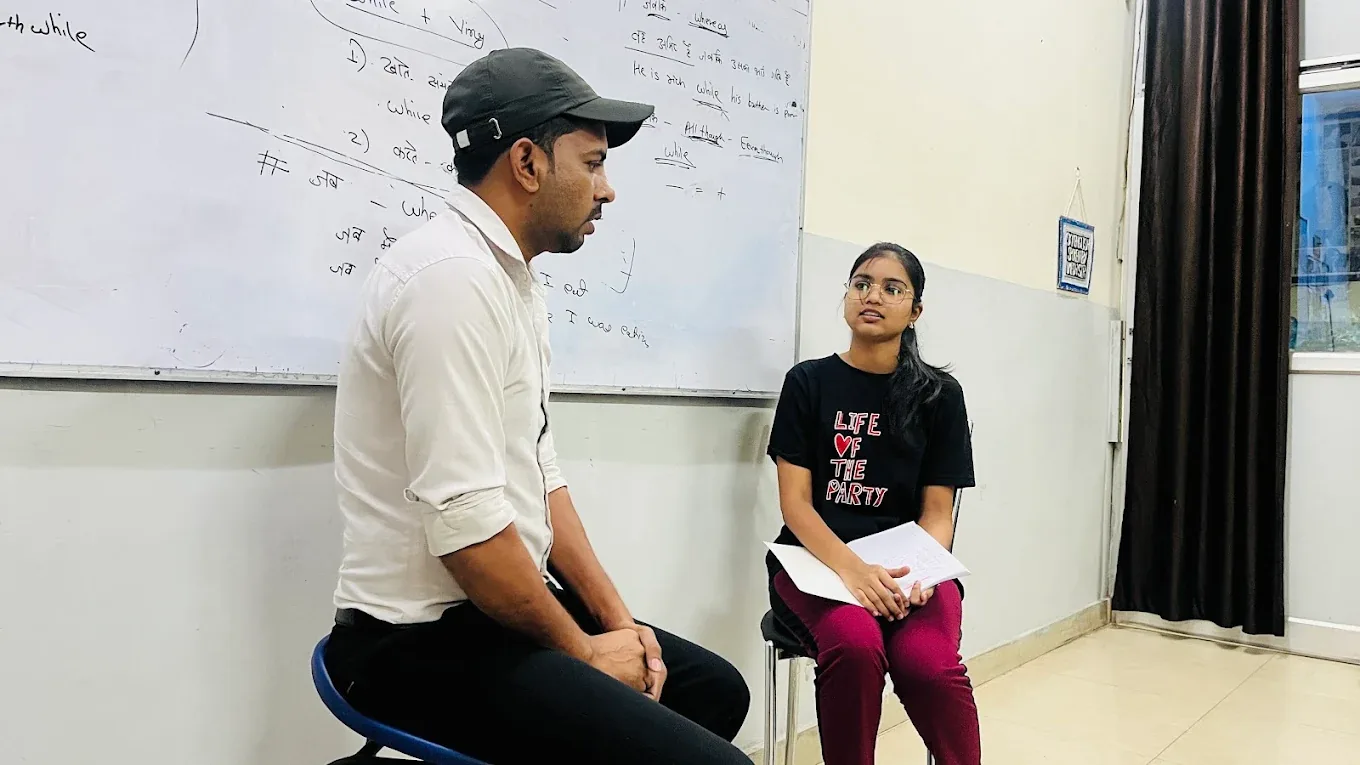
Learners practise introductions, common interview questions, follow-up answers, voice clarity, eye contact, and professional body language.
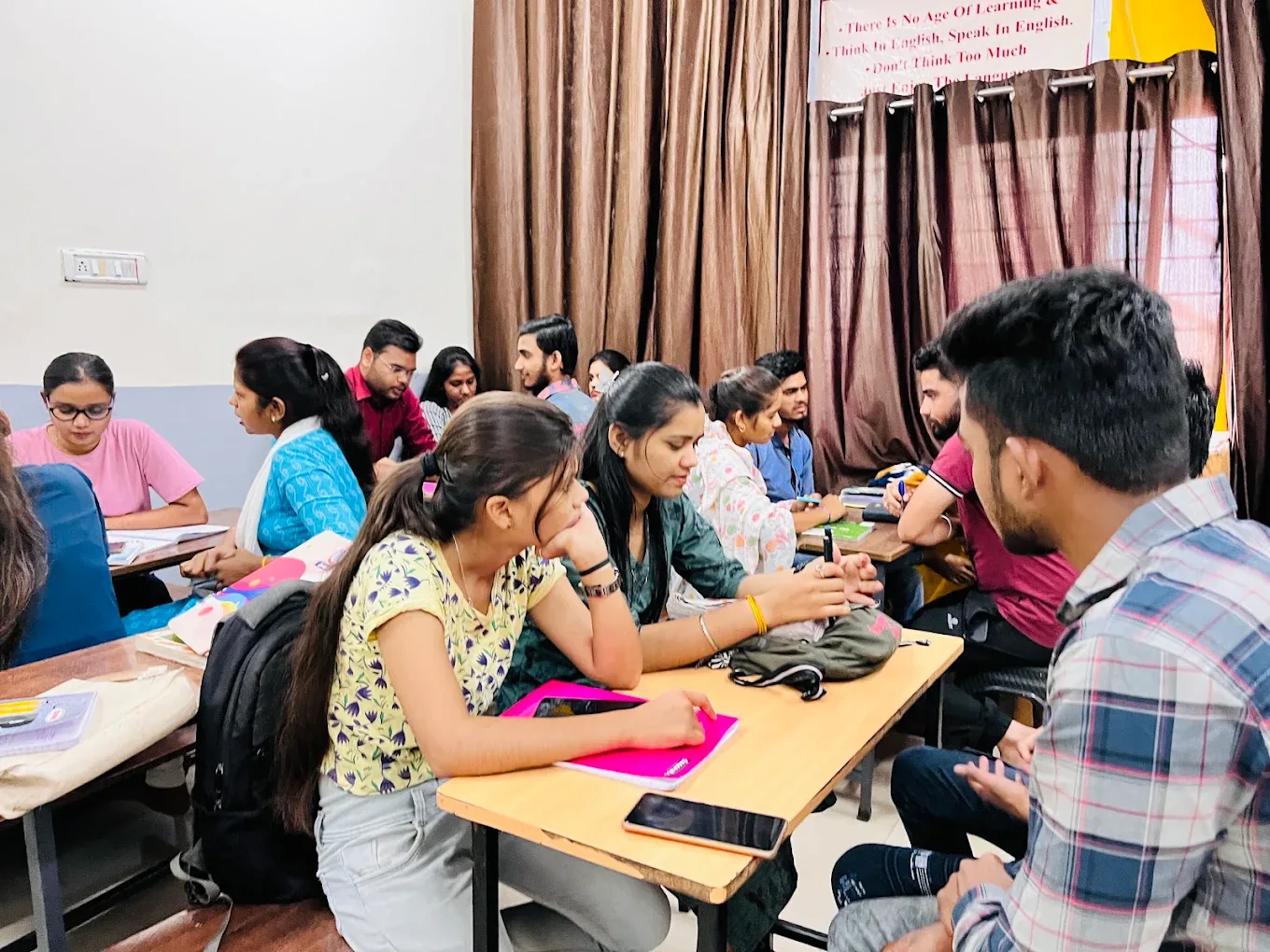
Group activities train learners to begin a point, listen, agree or disagree respectfully, give examples, and close their thoughts clearly.
See the feedback method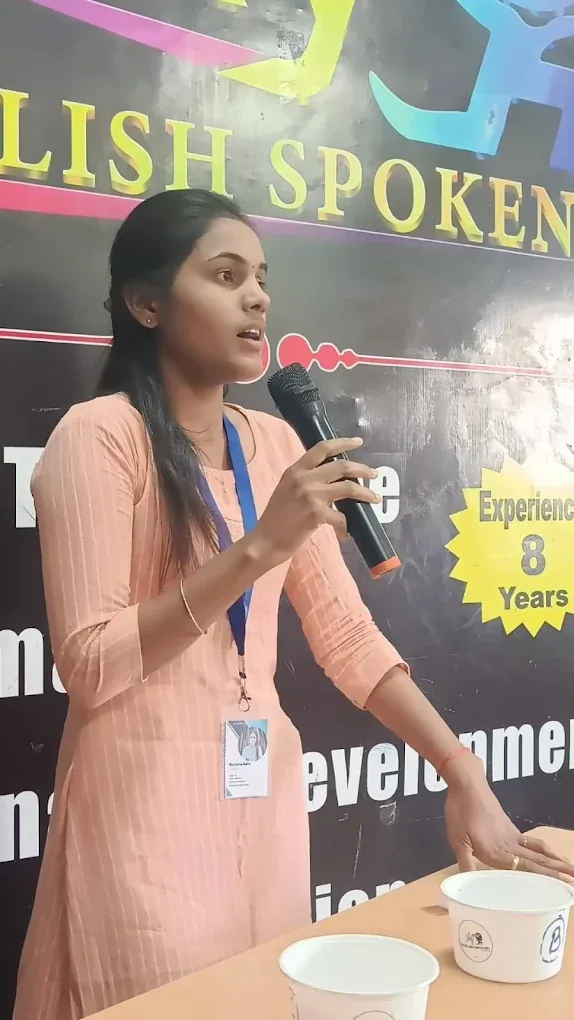
Role play makes English practical. Stage speaking adds voice, posture, expression, audience awareness, and the courage to continue even after a mistake.
New vocabulary becomes useful through quick response games, sentence challenges, presentations, and team competitions.

Best-speaker rounds, team challenges, vocabulary contests, and achievement moments encourage learners to participate more often and celebrate each other's progress.
Book a free demo and take your first active speaking step.